Through a chance introduction from a friend in the community, I learned that LINE was looking for an Infrastructure Developer Engineer for their Private Cloud. It happened that LINE uses OpenStack and was in the process of adopting Kubernetes—areas where I have significant experience. Since I was about to graduate from university in 2019, I submitted my resume with the mindset that even if I didn't get the job, it would be a valuable experience. Having completed the interviews and received an offer, I decided to write a post introducing the LINE interview process and sharing some insights for those interested in joining the company.
Contents
Interview Content
Position: Infrastructure Development Engineer (Private Cloud Platform)
Translated into English, it is roughly: Infrastructure Development Engineer (Private Cloud Platform)
Interview Method: Skype
Pre-test
There is a simple pre-test before the interview, which includes a few basic coding problems. After completing them, you'll need to provide some information, such as your familiarity with various coding tools and basic questions like your reasons for applying. It takes about an hour to complete, but keep in mind that you might be asked about your answers in subsequent interviews.
First Interview
The first interview is conducted by engineers and is more technically oriented. For me, the questions were mostly based on the experience listed in my resume. However, my experience might not be a universal reference because most of my background is in OpenStack, and since LINE's private cloud is also built on OpenStack, most of the discussion focused on that. If you don't have specific OpenStack experience, the questions will likely revolve around general cloud concepts. The questions are quite in-depth, requiring an understanding of how various components work and the potential challenges of large-scale deployment.
To give an example using Kubernetes:
在一個多 node 的 Kubernetes 環境下,create 了兩個 container 並且需要透過網路互相 ping 到,CNI 是使用 flannel。請問從 container create 到 container 可以互相 ping 到中間是怎麼運作的,packet 會怎麼流?
那如果 CNI 是 Calico,會有什麼不一樣?
在 10000 個 node 的狀況下,可能會有哪些因素會影響 networking 的效能?
Other questions were more common, such as what side projects I've worked on and which programming languages I know. Although I felt my performance in the first round wasn't great, I still passed and moved on to the second round.
Tokyo Office Tour
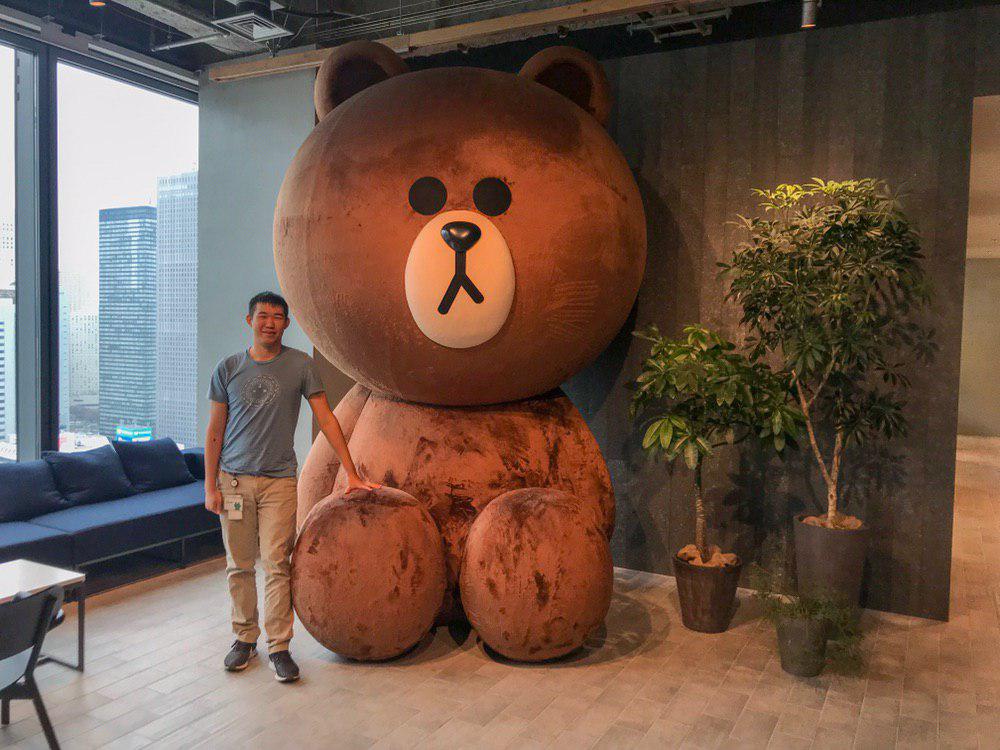
The second interview was originally scheduled to take place at the Tokyo office. However, during my trip to Tokyo, the LINE team was busy preparing for a large-scale event. As a result, the visit was changed to an office tour and a casual chat with potential future colleagues to get a feel for the work environment and atmosphere at LINE.
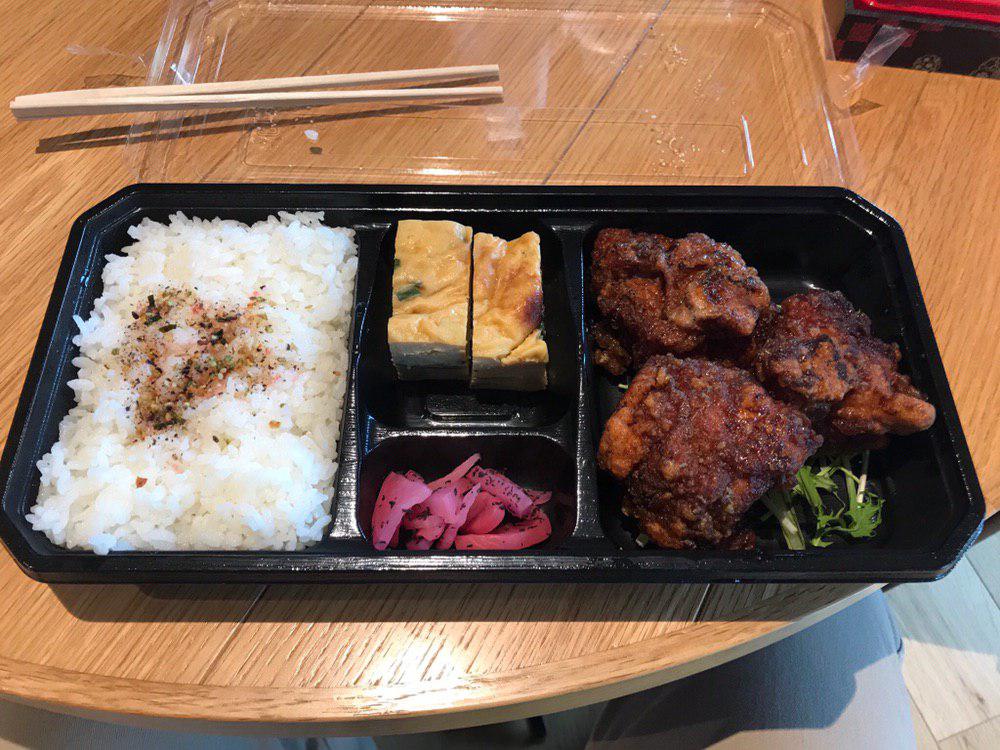
I'll just share some photos here to give you a sense of the place without much further introduction.
Photo with Brown:
Lunch bento:
View from the Tokyo Office:

Second Interview
The second interview was conducted by a manager, with an interpreter present to provide English-Japanese translation. The questions were less technical; the primary goal was to determine if the candidate could collaborate effectively within the team, though there were still a few simpler technical questions. Immediately after this round, HR explained the subsequent steps. Compared to the first interview, I found the second round more relaxed, although its content is harder to prepare for specifically.
Conclusion
Overall, I was very satisfied with the entire LINE interview process. I received the offer shortly after the second interview. I was also pleasantly surprised that they were willing to wait until my start date on January 1, 2020; I actually felt I had started interviewing too early... but this just goes to show that these companies are willing to wait for the right talent.
Lastly, a quick plug: LINE is still hiring engineers for this role, and there are many other openings in both Taiwan and Japan. If you're interested, I'd definitely recommend applying.
Infrastructure Engineer Position
Copyright Notice: All articles on this blog are licensed under CC BY-NC-SA 4.0 unless otherwise stated.


I'm a fresh graduate next year, currently studying in Tokyo, and I plan to apply for a front-end role at LINE. Could you share what the mainstream frameworks currently in use are?
Hello,
Since I'm not on that specific team, I'm not entirely sure.
You might want to look at previous introductions from the front-end team. I believe most of the common frameworks are used there to some degree.